Custom software studio · United States
Ambitious ideas.
Dependable
software.
We design and build AI solutions, web platforms, and mobile apps. A senior, founder-led team from your first product decision to launch.
01 / Product thinking, from day one02 / Human-reviewed engineering03 / Clear ownership, through launch
Selected work & Studio Lab
Ideas made tangible.
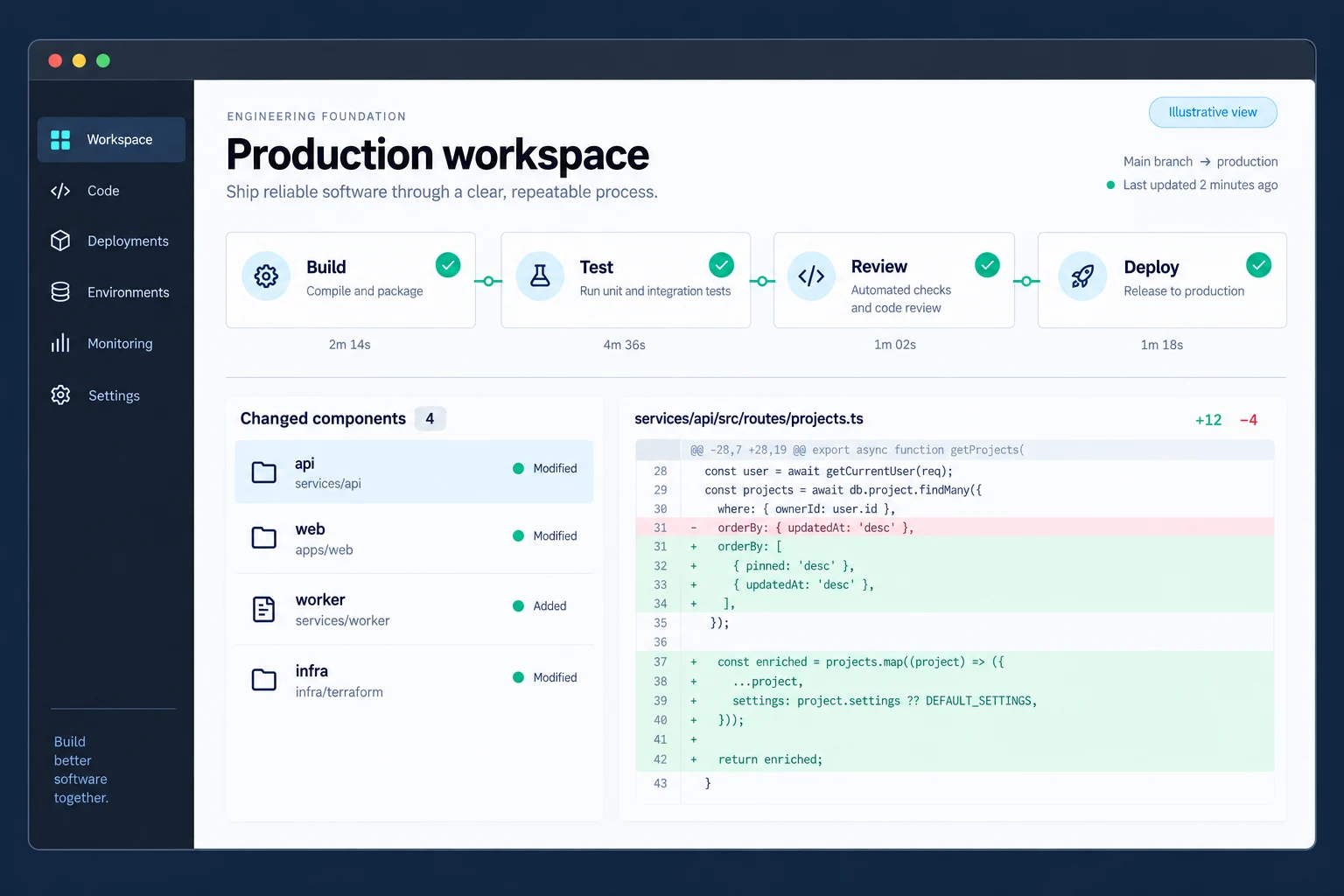
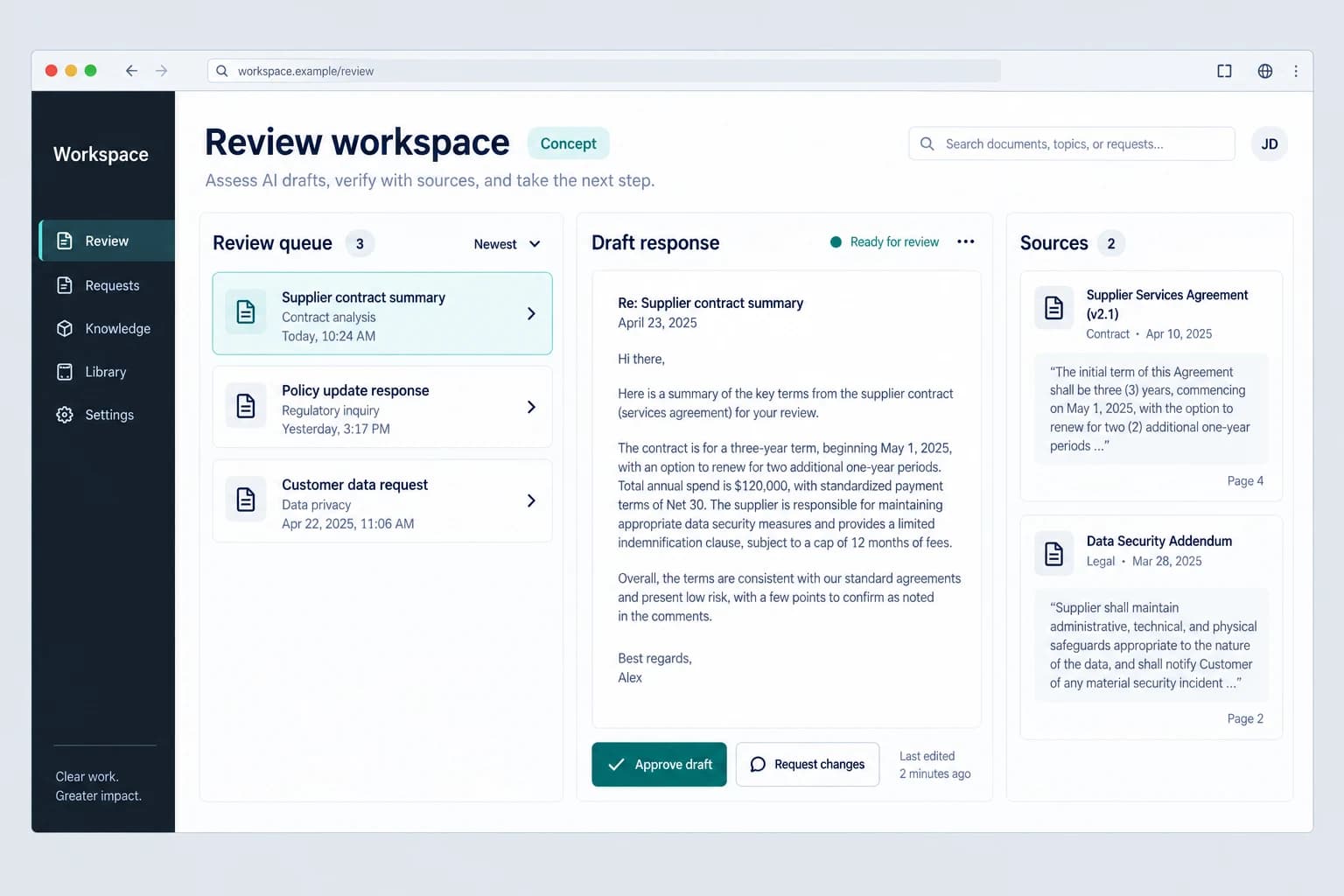
Explore our engineering foundation and product explorations. Studio R&D and fictional concepts, clearly labeled — a closer look at how we work.
End-to-end product development
One studio. The whole product journey.
Strategy, UX/UI, AI, web and mobile engineering, commerce, payments, quality, risk, and team support are treated as one decision system — not disconnected handoffs.
01
AI & intelligent systems
02
Product strategy & design
03
Web & mobile engineering
04
Commerce & payments
05
Quality, risk & teams
AI solutions
Useful AI. Built into the way you work.
We work from opportunity and prototype through production integration, evaluation, human review, and continued operation.
01
Find the useful problem
Frame the user task, evidence, data, risk, and operating value before choosing a model or interface.
02Prototype the workflow
Test model behavior, product states, source grounding, and human review while the direction is still inexpensive to change.
03Build the product
Connect models to real interfaces, systems, data boundaries, deterministic checks, evaluations, and observability.
04Accelerate delivery
Use coding agents inside a human-owned engineering workflow for implementation, testing, documentation, and modernization.
Collaboration
Different starting points. The same standard of ownership.
We can lead an entire product journey or join the part where strategy, design, engineering, or quality needs more depth.
For startups
Move from product idea to discovery, MVP, launch, and the evidence needed for the next decision.
For established teams
Modernize a product, add AI or mobile capability, connect systems, and make ownership clearer.
For enterprise
Work through complex workflows, stakeholders, integrations, quality, risk, and governance with explicit review points.
Product development process
Every stage produces a decision your team can review.
The path adapts to the product, but business intent, user experience, technical choices, quality, and ownership stay connected.
- 01
Discover
We learn the business, users, workflows, evidence, systems, constraints, risks, and decision the product must support.
- 02
Define the product
We turn discovery into a product model, prioritized scope, roadmap, architecture direction, and explicit open questions.
- 03
Design the experience
We shape journeys, information, interaction states, prototypes, and a reusable interface system.
- 04
Build and verify
We engineer the product and integrations, review AI-assisted work, and test behavior against material risks.
- 05
Launch and evolve
We release with observability and ownership, then support learning, operation, and the next product decision.
Industry experience
Software decisions change with the domain.
We connect product and engineering choices to the workflows, systems, risk, and operating expectations of six product environments.
01
EdTech
Learning products and operations for students, educators, administrators, and training organizations.
View industry02FinTech
Financial product experiences where trust, data integrity, identity, and operational control are central.
View industry03MedTech
Healthcare software shaped around clinical context, patient experience, privacy, and operational risk.
View industry04HiTech
Software products for technology companies building new platforms, developer tools, and intelligent capabilities.
View industry05Retail
Customer and operational products connecting discovery, purchase, fulfillment, service, and store systems.
View industry06IoT
Interfaces and platforms that help people understand, control, and operate connected devices.
View industryProduction standards
Product quality includes the parts users never see.
We make architecture, accessibility, security, quality, observability, documentation, and handoff part of delivery — while matching the depth of control to the actual product risk.
Human-owned engineering
AI may assist the work; experienced engineers remain responsible for architecture, review, tests, and release decisions.
Accessible experiences
Keyboard, focus, contrast, semantic structure, responsive states, and reduced motion are designed into the interface.
Operable systems
Logs, errors, data flows, environments, dependencies, and support paths are treated as part of the product.
Clean ownership
Code, content, designs, accounts, data, documentation, and responsibilities are identified for transfer and continued operation.
Studio insights
Useful answers for teams making software decisions.
Practical guidance on AI product readiness, platform choice, MVP scope, and what your business should own after delivery.
AI strategy7 min read
Is your AI product ready to build?
The questions that separate an interesting model demonstration from an operable product workflow.
Product strategy8 min read
Web, mobile, or progressive web app: choose from the product need
A practical comparison of distribution, device capability, offline behavior, user expectation, and ownership.
MVP6 min read
How to scope an MVP without building a disposable demo
Keep the learning loop complete while reducing features, integrations, and operating complexity deliberately.
Ownership7 min read
What you should own after a software project
Code is only one part of a clean handoff. Accounts, data, infrastructure, design, and operating knowledge matter too.
A note from the founders
“Software should make the business and the user’s work clearer — not turn them into permanent dependents of the team that built it.”
Bering Studio brings product management, systems analysis, enterprise engineering, design, and responsible AI-assisted delivery into one founder-led team. We expose the important decisions and prepare the product for continued ownership.
The founders · Bering Studio
Ready to turn the next product decision into working software?
Tell us what the business needs to make possible, who the product serves, and what already exists.
Start a project